

Category: Artificial Intelligence

  • Top 10 Benefits of AI in Logistics Rate Management

    Top 10 Benefits of AI in Logistics Rate Management

    How do businesses consistently optimize shipping costs without sacrificing delivery speed?
    Why do some logistics teams accurately predict freight rates while others struggle with fluctuating prices?
    Can artificial intelligence truly make rate management smarter, faster, and more profitable?

    The answer lies in AI-driven logistics rate management.

    In today’s fast-paced supply chain environment, managing freight costs is becoming increasingly complex. Factors such as fuel price fluctuations, carrier availability, regional demand spikes, and seasonal trends make manual rate management inefficient and error-prone. Artificial Intelligence (AI) offers a solution by analyzing vast amounts of data in real-time, automating pricing decisions, and providing actionable insights that traditional methods cannot match.

    Below are the top 10 benefits of AI in logistics rate management, explained for decision-makers who want to streamline operations, reduce costs, and enhance competitiveness.


    1. How Does AI Improve Accuracy in Rate Forecasting?

    One of the primary benefits of AI in logistics rate management is enhanced accuracy in forecasting.

    Traditional rate management relies on historical data, spreadsheets, or manual calculations, which can lead to errors and inconsistencies. AI uses machine learning algorithms to:

    • Analyze historical shipping data
    • Factor in real-time market trends
    • Predict carrier pricing changes

    Business impact:

    • More precise budgeting for shipping costs
    • Reduced risk of overpaying for freight
    • Better negotiation leverage with carriers

    Accurate forecasting ensures businesses stay competitive and profitable in a volatile logistics market.


    2. Can AI Reduce Operational Costs in Logistics?

    Yes — AI significantly reduces logistics operational costs.

    By analyzing shipment patterns, route efficiency, and carrier pricing, AI systems can:

    • Identify the most cost-effective carriers
    • Optimize load planning
    • Minimize empty miles

    Business benefits:

    • Lower freight expenses
    • Improved supply chain efficiency
    • Increased ROI on logistics spend

    Companies that implement AI-based rate management often see cost reductions of 10–20% within the first year.


    3. How Does AI Enable Real-Time Rate Optimization?

    Freight rates can change daily or even hourly due to market fluctuations, fuel price changes, or seasonal demand.

    AI enables real-time rate optimization by:

    • Continuously monitoring market conditions
    • Adjusting pricing strategies instantly
    • Recommending alternative carriers or shipping methods

    Business advantage:

    • Maximize cost savings without manual intervention
    • Respond quickly to unexpected rate hikes
    • Maintain competitive pricing for customers

    Real-time optimization ensures businesses are not overpaying or missing opportunities to reduce costs.


    4. How Can AI Help Improve Carrier Selection?

    Choosing the right carrier impacts both cost and service quality. AI improves carrier selection by evaluating:

    • Historical performance
    • On-time delivery rates
    • Cost-effectiveness
    • Capacity availability

    Business impact:

    • Better alignment with business requirements
    • Improved delivery reliability
    • Reduced shipping errors and delays

    AI enables logistics teams to make data-driven decisions rather than relying on assumptions or manual comparisons.


    5. How Does AI Reduce Human Errors in Rate Management?
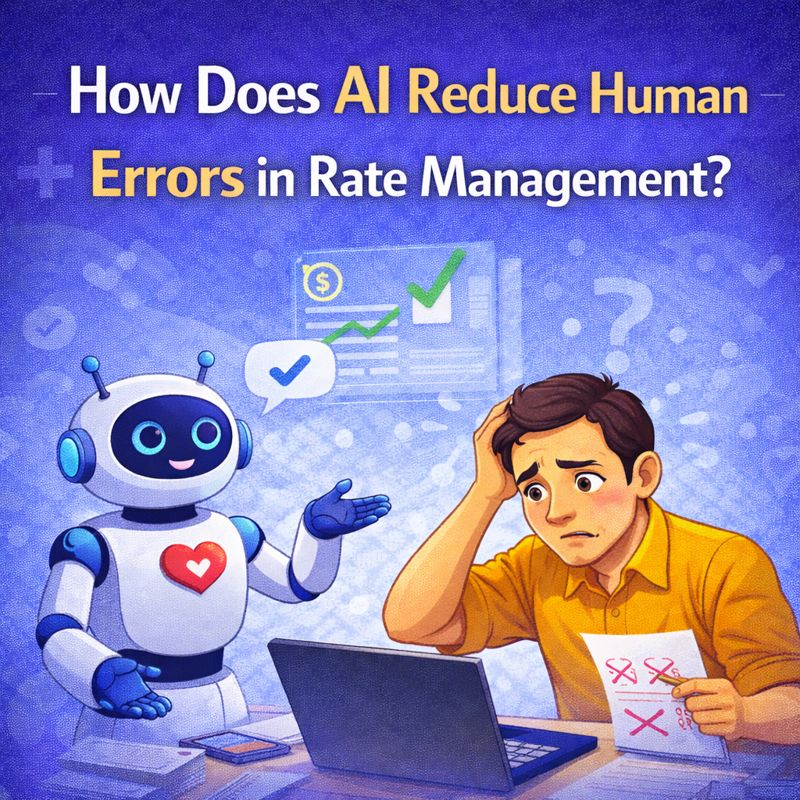
    Benefits of AI in Logistics

    Manual rate management is prone to human errors due to:

    • Spreadsheet miscalculations
    • Misinterpretation of contracts
    • Manual data entry mistakes

    AI automates these processes, minimizing mistakes while improving consistency.

    Business benefits:

    • Accurate invoicing and billing
    • Reduced dispute resolution with carriers
    • Faster decision-making

    Automation ensures the logistics team can focus on strategic tasks instead of correcting errors.


    6. Can AI Support Dynamic Pricing Strategies?

    AI allows businesses to implement dynamic pricing for freight management.

    Dynamic pricing uses real-time data to adjust logistics rates based on:

    • Carrier demand and availability
    • Fuel price fluctuations
    • Shipment urgency or priority

    Business advantages:

    • Optimize profit margins
    • Adapt to changing market conditions
    • Maintain competitive delivery pricing

    This flexibility is particularly valuable for companies managing large and diverse shipments.


    7. How Does AI Enhance Predictive Analytics in Logistics?

    Predictive analytics allows businesses to anticipate changes and plan ahead.

    AI analyzes historical and real-time logistics data to:

    • Forecast peak shipping periods
    • Predict carrier delays
    • Estimate future freight costs

    Business benefits:

    • Proactive planning reduces last-minute expenses
    • Minimizes the risk of shipping delays
    • Enhances overall supply chain efficiency

    Predictive insights give businesses a competitive edge in logistics operations.


    8. How Can AI Improve Contract Management with Carriers?

    Managing contracts with multiple carriers can be complex and time-consuming.

    AI simplifies this by:

    • Automatically analyzing contract terms
    • Suggesting optimal contracts based on shipment patterns
    • Monitoring compliance and performance

    Business impact:

    • Better adherence to negotiated rates
    • Faster carrier selection
    • Reduced legal and operational risk

    Businesses can maximize contract value and avoid hidden costs using AI.


    9. How Does AI Support Sustainability in Logistics?

    Sustainability is increasingly critical for modern supply chains. AI helps reduce the environmental footprint by:

    • Optimizing routes to lower fuel consumption
    • Reducing empty miles and inefficiencies
    • Recommending eco-friendly carriers

    Business advantages:

    • Reduced carbon emissions
    • Compliance with green regulations
    • Enhanced brand reputation

    AI in logistics rate management not only saves money but also supports corporate social responsibility goals.


    10. How Can AI Integration Boost Overall Supply Chain Efficiency?

    Beyond rate management, AI integrates into broader supply chain systems to:

    • Improve inventory management
    • Optimize warehouse operations
    • Enhance demand planning

    Business benefits:

    • Streamlined logistics workflows
    • Increased operational efficiency
    • Faster response to market fluctuations

    AI transforms rate management from a cost-control task into a strategic advantage.


    Final Thoughts: Why Businesses Are Investing in AI for Rate Management

    AI in logistics rate management is no longer optional — it’s a strategic necessity.

    The key benefits include:

    • Accurate rate forecasting
    • Cost reduction
    • Real-time optimization
    • Improved carrier selection
    • Reduced errors
    • Dynamic pricing
    • Predictive insights
    • Contract management
    • Sustainability
    • Overall supply chain efficiency

    Companies leveraging AI gain a competitive edge, reduce operational risks, and improve profitability while maintaining high service standards.

    For businesses looking to implement AI-driven logistics solutions, working with custom AI development experts can ensure seamless integration with existing systems, predictive analytics, and real-time optimization dashboards.

    • AI in logistics rate management improves forecasting accuracy, reduces operational costs, enables real-time optimization, supports predictive analytics, and enhances carrier selection.

    • AI analyzes shipment patterns, route efficiency, and carrier pricing to identify cost-saving opportunities, minimize empty miles, and select the most cost-effective carriers.

    • Yes. AI leverages historical data, market trends, and real-time inputs to accurately predict freight rates, demand spikes, and carrier pricing changes.

    • Absolutely. AI enables dynamic pricing by continuously monitoring market fluctuations, fuel prices, and carrier availability to optimize shipping rates automatically.

    • Beyond rate management, AI enhances inventory planning, warehouse operations, demand forecasting, and contract management, making the entire supply chain more efficient and responsive.

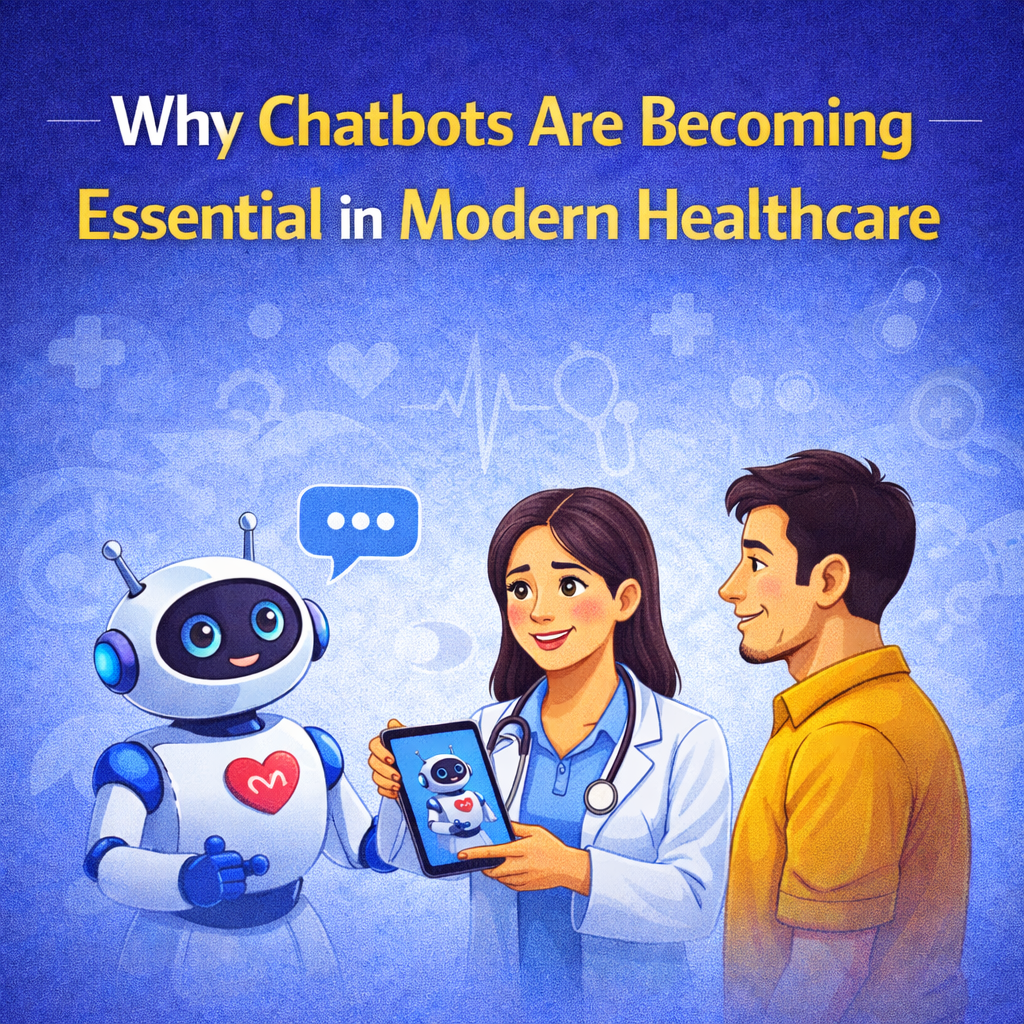
  • Top 10 Benefits of Chatbots in Healthcare Transforming Patient Care in 2025

    Top 10 Benefits of Chatbots in Healthcare Transforming Patient Care in 2025

    Can healthcare systems really improve patient experience without increasing staff workload?
    How are hospitals, clinics, and digital health platforms scaling care while controlling costs?

    In 2025, healthcare organizations face growing pressure—rising patient volumes, staff shortages, higher expectations for digital experiences, and strict compliance requirements. One technology increasingly addressing these challenges is healthcare chatbots.

    This article explores the top benefits of chatbots in healthcare, explaining why hospitals, clinics, insurers, and health-tech companies are adopting conversational AI to improve outcomes, efficiency, and patient satisfaction.


    1. 24/7 Patient Support Without Increasing Staff Load

    One of the biggest benefits of chatbots in healthcare is their ability to provide round-the-clock patient support.

    Healthcare chatbots can:

    • Answer common patient questions anytime
    • Provide instant responses outside clinic hours
    • Reduce dependency on front-desk staff
    • Improve accessibility for patients in different time zones

    Patients no longer need to wait until business hours to get basic information, while healthcare staff are freed from repetitive queries.


    2. Reduced Administrative Burden for Healthcare Staff

    Administrative tasks consume a significant portion of healthcare professionals’ time.

    Chatbots help by automating:

    • Appointment scheduling and rescheduling
    • Insurance and billing-related queries
    • Pre-visit questionnaires
    • Follow-up reminders

    By reducing manual administrative work, chatbots allow doctors, nurses, and administrative staff to focus on clinical and high-value patient interactions.


    3. Improved Patient Engagement and Experience

    Patient engagement is critical for better health outcomes, yet many patients feel disconnected from healthcare systems.

    Chatbots improve engagement by:

    • Providing instant responses
    • Using conversational, easy-to-understand language
    • Offering personalized interactions
    • Guiding patients step-by-step

    This leads to higher patient satisfaction, better communication, and improved trust in healthcare providers.


    4. Faster Appointment Booking and Triage

    Delays in appointment booking are a common frustration for patients.

    Healthcare chatbots streamline this by:

    • Checking availability in real time
    • Booking appointments instantly
    • Performing basic symptom triage
    • Directing patients to the right department or specialist

    This reduces wait times, improves resource allocation, and ensures patients receive timely care.


    5. Support for Remote Care and Telemedicine

    As telehealth adoption continues to grow, chatbots play a crucial role in supporting remote care.

    Chatbots can:

    • Assist patients before virtual consultations
    • Collect symptoms and medical history
    • Guide patients through telemedicine workflows
    • Provide post-consultation follow-ups

    This makes virtual care more structured, efficient, and scalable.


    6. Better Medication Adherence and Follow-Ups

    Medication non-adherence is a major issue in healthcare, leading to poor outcomes and higher costs.

    Chatbots help improve adherence by:

    • Sending medication reminders
    • Answering questions about dosage and timing
    • Notifying patients about prescription refills
    • Encouraging follow-up visits

    These small interventions can significantly improve long-term patient outcomes.


    7. Cost Savings for Healthcare Organizations

    Another major benefit of chatbots in healthcare is cost efficiency.

    By automating routine interactions, chatbots help:

    • Reduce call center workload
    • Minimize staffing costs for repetitive tasks
    • Lower operational overhead
    • Improve ROI on digital health investments

    For healthcare providers operating on tight margins, these savings are substantial.


    8. Improved Data Collection and Patient Insights

    Healthcare chatbots can collect valuable patient data in a structured manner.

    They can:

    • Capture symptoms and patient history
    • Collect feedback and satisfaction scores
    • Record behavioral and engagement patterns
    • Feed data into EHRs and analytics systems

    This data helps providers make better clinical and operational decisions while improving personalization. When combined with purpose-built AI development services, healthcare organizations can turn this data into predictive insights, intelligent triage, and decision-support systems tailored to their workflows.


    9. Scalability During High-Demand Situations

    Healthcare demand can spike unexpectedly during:

    • Seasonal illness outbreaks
    • Public health emergencies
    • Vaccination drives
    • Awareness campaigns

    Chatbots scale instantly without additional staffing, ensuring consistent patient support during high-demand periods.


    10. Enhanced Compliance and Standardized Communication

    Healthcare communication must be accurate, consistent, and compliant with regulations.

    Chatbots help by:

    • Delivering standardized responses
    • Reducing human error in communication
    • Following predefined clinical and compliance rules
    • Maintaining audit-friendly interaction logs

    This is especially valuable for regulated environments like hospitals, insurers, and digital health platforms.


    Why Chatbots Are Becoming Essential in Modern Healthcare

    The benefits of chatbots in healthcare go beyond automation. They represent a shift toward:

    • Patient-centric care
    • Digital-first healthcare delivery
    • Scalable health services
    • Data-driven decision-making

    Chatbots act as a bridge between patients and healthcare systems, improving access while reducing operational strain.


    When Does It Make Sense to Implement Healthcare Chatbots?

    Healthcare chatbots are especially valuable when:

    • Patient volumes are high
    • Administrative workload is overwhelming
    • Telemedicine services are expanding
    • Patient engagement needs improvement
    • Cost optimization is a priority

    Whether for hospitals, clinics, insurers, or health-tech startups, chatbots offer measurable operational and patient-care benefits.


    Final Thoughts

    The benefits of chatbots in healthcare are clear: improved patient experience, reduced staff burden, better engagement, and scalable care delivery.

    As healthcare systems continue to evolve in 2025, chatbots are no longer experimental tools—they are strategic digital assets that support both clinical excellence and operational efficiency.

    • The main benefits of chatbots in healthcare include 24/7 patient support, reduced administrative workload, improved patient engagement, faster appointment scheduling, and better care accessibility.

    • Yes, healthcare chatbots can be designed to meet strict compliance and data security requirements by following healthcare regulations and using secure, standardized communication protocols.

    • Chatbots improve patient engagement by providing instant responses, personalized interactions, medication reminders, follow-ups, and easy access to healthcare information.

    • Hospitals, clinics, telemedicine platforms, insurers, and digital health startups benefit the most from chatbots, especially those handling high patient volumes or remote care services.

  • Top 10 Conversational AI Use Cases Transforming Businesses in 2025

    Top 10 Conversational AI Use Cases Transforming Businesses in 2025

    Conversational AI has shifted from being a “nice-to-have” experiment to a core business enabler in 2025. Thanks to better language models, improved contextual understanding, multimodal capabilities (voice + text + image), and easy integration with enterprise data via RAG (Retrieval-Augmented Generation), businesses of every size—from funded startups to global brands—are adopting conversational AI not just to reduce costs but to accelerate growth, increase efficiency, and modernize customer experiences.

    If you’re a business owner evaluating this technology, the real question is no longer “Should I adopt conversational AI?” but rather “Which use cases will generate the highest ROI?” — and whether you need custom conversational AI development services tailored to your business goals.

    This blog breaks down the top 10 use cases for conversational ai​ in 2025, why they matter, and how to assess if each is right for your business.


    Why Conversational AI Matters More Than Ever in 2025

    use cases for conversational ai​

    Before diving in, here’s why 2025 is different:

    • AI models are more accurate and context-aware, meaning fewer hallucinations and more dependable business use.
    • RAG (Retrieval-Augmented Generation) allows AI to answer using your internal documents, policies, FAQs, product specs—reducing risks and improving trust.
    • Business leaders are reporting measurable cost savings through ticket deflection, faster support resolution, and lower agent workload.
    • Customers now expect immediate responses through chat, voice, and messaging platforms.
    • Enterprise adoption has normalized, meaning your competitors are likely testing or deploying conversational AI already.

    With that context, let’s explore the most impactful ways businesses are applying conversational AI in 2025.


    1. 24/7 Customer Support & Automated Self-Service

    This remains the #1 driver of conversational AI adoption.

    What it does

    • Answers common queries
    • Tracks orders
    • Handles refunds
    • Troubleshoots basic issues
    • Books service appointments
    • Routes complex cases to human agents

    Why it matters

    • Instant responses increase customer satisfaction
    • Deflects 40–70% of repetitive tickets depending on the industry
    • Operates 24/7 without needing a full support team
    • Reduces cost per ticket drastically

    Best for:

    E-commerce, logistics, retail, SaaS, healthcare providers, service companies.

    When to pilot it

    If more than 30% of your tickets are repetitive or simple.


    2. Conversational Commerce & AI Sales Assistants

    Conversational AI is now smart enough to act like a personal shopping assistant inside your website, app, or WhatsApp/Instagram DM.

    What it does

    • Helps customers find the right product
    • Asks guided questions (“Who are you buying this for?”)
    • Recommends upsells and bundles
    • Assists during checkout
    • Reduces drop-offs

    Why it matters

    • Direct impact on conversion rates
    • Customers buy faster because they get personalized help
    • AI never sleeps, upsells, or forgets product info

    Industries seeing biggest gains

    E-commerce, fashion, beauty, electronics, home décor, fitness products.

    When to pilot

    If your website has traffic but low conversion or high cart abandonment.


    3. Lead Qualification, Nurturing & Conversational Marketing

    Conversational AI can replace generic forms with intelligent, human-like conversations.

    What it does

    • Captures visitor intent
    • Asks qualifying questions
    • Scores the lead
    • Schedules meetings
    • Sends relevant documents or demos
    • Automatically syncs with CRM

    Why it matters

    • More conversions than static forms
    • Faster movement from visitor → lead → opportunity
    • SDR team gets better-quality calls and less manual work
    • Shorter sales cycles

    Ideal for

    B2B SaaS, software agencies, consulting firms, financial services.

    When to pilot

    If your team wastes too much time on low-intent leads.


    4. Internal HR & IT Helpdesk Automation

    While most companies focus on external use cases, internal automation produces huge ROI.

    What it does

    • Answers HR queries (leave policy, payroll dates, benefits)
    • Helps with IT troubleshooting
    • Assists in onboarding (“What are my first-week tasks?”)
    • Helps employees find documents fast (policies, SOPs)

    Why it matters

    • Cuts HR & IT workload
    • Reduces employee downtime
    • Improves onboarding and internal satisfaction
    • Makes operations more consistent

    Industries using this heavily

    Large enterprises, IT companies, BFSI, manufacturing.

    When to pilot

    When HR/IT spends too much time repeating answers.


    5. RAG-Powered Knowledge Assistants & Virtual Experts

    This is one of the fastest-growing categories in 2025.

    What it does

    • Allows employees to ask questions like:
      “What’s our refund policy for product X?”
      “Show me the latest version of the contract template.”
      “Explain the compliance requirement for state Y.”
    • Pulls data from your internal documents
    • Provides cited answers
    • Reduces hallucinations
    • Acts as a single source of truth

    Why it matters

    • Drastically cuts time wasted searching for information
    • Improves policy compliance
    • Empowers teams with accurate, real-time knowledge
    • Protects against misinformation

    Who benefits most

    Customer support agents, sales teams, legal teams, compliance departments, onboarding teams.

    When to pilot

    If employees search through 50+ documents or rely on outdated knowledge bases.


    6. AI for Sales Teams: Coaching, Summaries & Productivity

    Modern sales teams rely on AI to remove “busy work” and improve real-time decisions.

    What it does

    • Generates meeting summaries
    • Extracts next steps and commitments
    • Suggests objection-handling responses
    • Drafts follow-up emails
    • Tracks CRM updates automatically

    Why it matters

    • Reps spend more time selling, less time administering
    • Improved call quality
    • Better deal progression
    • Increased sales velocity

    Best for

    B2B companies with regular demos, discovery calls, or outbound sales.

    When to pilot

    If reps spend more than 1–2 hours/day on administrative tasks.


    7. Personalized Post-Sale Support & Customer Retention

    AI is now smart enough to drive loyalty and retention, not just acquisition.

    What it does

    • Tailored renewal reminders
    • Personalized product tips based on activity
    • Proactive issue detection
    • Usage-based recommendations (“You’re at 80% storage, here’s what to do next”)
    • Automated onboarding journeys

    Why it matters

    • Reduces customer churn
    • Improves satisfaction
    • Can increase upsell and expansion revenue
    • Reduces manual CSM workload

    Best for

    SaaS, subscription services, banking, fitness, healthcare.

    When to pilot

    If renewal reminders or onboarding are inconsistent or fully manual.


    8. Multilingual Support for Global Audiences

    2025 AI can translate and respond natively in 100+ languages with cultural context.

    What it does

    • Handles support queries in local languages
    • Converts incoming messages to English for agents
    • Provides responses in the customer’s preferred language
    • Maintains tone and cultural nuance

    Why it matters

    • Enables global scaling without hiring regional teams
    • Higher customer trust and satisfaction
    • Stronger brand reputation in non-English markets

    When to pilot

    If you serve customers in more than three regions or languages.


    9. Voice AI & Next-Gen IVR Systems

    Customers hate long phone menus. Businesses hate call overload. Voice AI fixes both.

    What it does

    • Lets callers speak naturally instead of navigating menus
    • Books appointments
    • Provides account information
    • Troubleshoots common problems
    • Routes complex calls

    Why it matters

    • Lower call abandonment
    • Faster resolutions
    • Improved caller experience
    • Lowers operational costs for call centers

    Industries using voice AI heavily

    Banks, insurance, telecom, hospitals, government helplines, retail.

    When to pilot

    If phone support is your highest-cost support channel.


    10. Conversational Analytics, Compliance & Insights

    Every interaction—chat, email, voice—contains valuable insights.

    What conversational analytics does

    • Automatically analyzes sentiment
    • Detects compliance issues
    • Flags risky statements
    • Extracts product feedback
    • Highlights trending customer problems
    • Helps refine marketing messaging

    Why it matters

    • Better decisions without manual analysis
    • Stronger compliance and risk mitigation
    • Faster identification of recurring issues
    • Improved customer experience

    Best for

    Regulated industries, SaaS products, large support teams.

    When to pilot

    If you’re manually analyzing tickets or calls today.


    How Business Owners Should Evaluate Conversational AI in 2025

    1. Don’t deploy everything — pick one high-value use case

    Start where the pain is highest:

    • High support volume
    • Slow lead conversion
    • Poor onboarding
    • Information bottlenecks
    • High compliance risk

    2. Set measurable KPIs

    Examples:

    • Ticket deflection rate
    • Reduction in resolution time
    • Conversion uplift
    • Cart abandonment reduction
    • Sales call accuracy
    • Employee productivity time saved

    3. Combine AI + your own data

    Generic AI is not useful for businesses.
    AI with your data = accurate, grounded, trustworthy.

    This is where RAG becomes essential.

    4. Maintain human-in-the-loop

    AI handles 60–80% of queries.
    Humans handle complexity.

    This hybrid model gives the best customer experience.

    5. Scale gradually

    Pilot → measure → improve → expand into more use cases.


    What Results Should You Expect?

    Across industries, businesses deploying conversational AI typically see:

    • 30–70% reduction in repetitive tickets
    • 20–40% improvement in conversion rates (e-commerce & D2C)
    • 50–80% faster onboarding for employees
    • Lower churn due to personalized retention flows
    • Significant improvement in agent productivity

    AI is not a magic wand, but when integrated properly, it becomes a cost-saving + revenue-generating engine.


    Final Thought: Conversational AI Is a Strategic Investment, Not a Trend

    For business owners, the real competitive advantage comes from:

    • Understanding customer needs faster
    • Responding instantly across every channel
    • Personalizing experiences at scale
    • Freeing employees from repetitive work
    • Making better decisions with AI-driven insights

    Conversational AI is not replacing humans—it’s augmenting them. Businesses that adopt it early in 2025 will gain efficiency, improve customer experience, and build stronger operational foundations for long-term growth.

    • The most impactful use cases for conversational AI include 24/7 customer support, lead qualification, conversational commerce, internal HR/IT automation, multilingual support, and voice-based IVR systems. These areas typically deliver the fastest ROI for businesses.

    • Conversational AI automates repetitive queries, provides instant responses, assists with order tracking or troubleshooting, and routes complex issues to human agents. This reduces ticket volume by 40–70% and significantly lowers overall support costs.

    • Yes. Modern AI tools are easy to implement, require minimal infrastructure, and can be scaled gradually. SMBs benefit greatly from conversational AI because it improves customer experience, increases conversion rates, and reduces operational workload without needing large teams.

    • Start by identifying your biggest bottleneck—high support volume, low conversion rates, long onboarding times, or information overload. Choose one high-impact use case, set clear KPIs, run a pilot, and then expand once you see measurable results.