
Category: Digital Transformation

  • Top 10 Benefits of Enterprise Search for Modern Businesses

    Top 10 Benefits of Enterprise Search for Modern Businesses

    Do your employees spend hours digging through emails, shared drives, or multiple software platforms to find the information they need?
    Are critical decisions delayed because data is scattered across systems?
    Could your organization gain a competitive edge if information was instantly accessible?

    If these questions sound familiar, it’s time to consider enterprise search solutions. Enterprise search is not just about finding documents — it’s about making data actionable, improving productivity, and driving smarter business decisions.

    Let’s explore the top 10 benefits of enterprise search and why businesses across industries are investing in this powerful technology.


    1. How Does Enterprise Search Improve Productivity?

    The most obvious benefit is time saved.

    Employees waste countless hours looking for files, emails, reports, or knowledge stored in different systems. Enterprise search centralizes data and provides:

    • A single search interface across platforms
    • Smart indexing of structured and unstructured data
    • Contextual results tailored to the user

    Business impact:

    • Employees find information faster
    • Reduced frustration and repeated work
    • Increased focus on high-value tasks

    When people can find what they need instantly, productivity and morale rise.


    2. Can Enterprise Search Improve Decision-Making?

    Absolutely. Data scattered across multiple systems often results in delayed or misinformed decisions.

    Enterprise search:

    • Brings all relevant data together quickly
    • Provides insights from internal knowledge bases, CRM, ERP, and emails
    • Highlights related content that may otherwise be overlooked

    Business benefits:

    • Decisions backed by comprehensive information
    • Reduced reliance on intuition or guesswork
    • Faster response to business challenges

    In short, enterprise search ensures that the right people have the right information at the right time.


    3. How Does Enterprise Search Enhance Customer Service?

    Customer-facing teams often need access to product manuals, customer histories, or technical guides.

    Enterprise search helps by:

    • Giving instant access to relevant customer data
    • Providing AI-driven suggestions for solutions
    • Reducing time spent switching between multiple tools

    Business impact:

    • Faster response to customer queries
    • Improved service quality and satisfaction
    • Higher retention and loyalty

    Happy customers are often the result of empowered employees who have information at their fingertips.


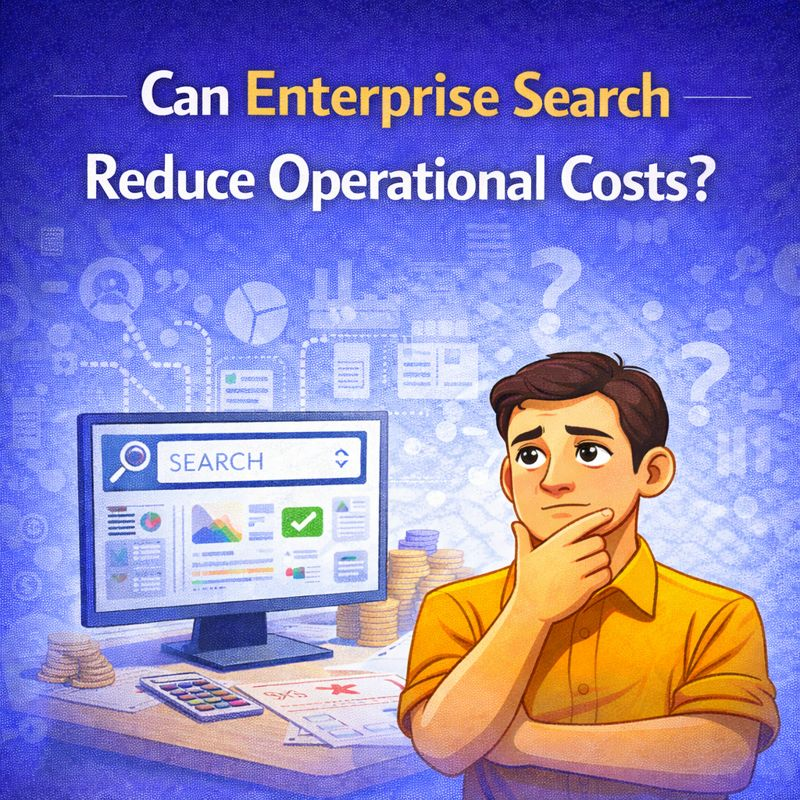
    4. Can Enterprise Search Reduce Operational Costs?
    Benefits of Enterprise Search

    Yes. Though enterprise search may seem like a technology investment, it often reduces hidden costs.

    How? By:

    • Minimizing duplicated work due to missing or hard-to-find documents
    • Reducing errors caused by incomplete information
    • Shortening time spent on training and onboarding

    Business advantage:

    • Lower operational inefficiencies
    • Faster project completion
    • More predictable budgeting

    A properly implemented enterprise search solution can pay for itself quickly.


    5. How Does Enterprise Search Support Knowledge Management?

    Knowledge is power — but only if it’s accessible.

    Enterprise search:

    • Captures tacit knowledge from employees
    • Indexes documentation, guides, and shared resources
    • Makes it discoverable for new or existing staff

    Business benefits:

    • Preserves organizational knowledge
    • Reduces dependency on individual employees
    • Enables smoother transitions during employee turnover

    It’s like giving your team a collective brain that never forgets.


    6. Can Enterprise Search Improve Collaboration Across Teams?

    Absolutely. Teams often work in silos, unaware of related work happening elsewhere in the organization.

    Enterprise search bridges these gaps by:

    • Making cross-departmental data accessible
    • Highlighting relevant projects and documents
    • Suggesting colleagues or experts related to specific queries

    Business impact:

    • Improved teamwork and alignment
    • Faster project execution
    • Greater innovation from shared insights

    When knowledge flows freely, collaboration becomes more natural and productive.


    7. How Does Enterprise Search Enhance Compliance and Risk Management?

    Regulatory compliance often requires organizations to locate and produce specific documents quickly.

    Enterprise search helps by:

    • Indexing legal, financial, and audit documents
    • Allowing secure access control for sensitive data
    • Providing detailed search logs for accountability

    Business benefits:

    • Faster response to audits and compliance requests
    • Reduced risk of non-compliance penalties
    • Improved internal controls and reporting

    In highly regulated industries, this feature alone can save millions in fines and operational costs.


    8. Can Enterprise Search Integrate With AI to Deliver Smarter Insights?

    Yes — modern enterprise search solutions often leverage AI and machine learning to go beyond keyword searches.

    AI can:

    • Understand intent and context
    • Provide predictive search suggestions
    • Highlight related content that users didn’t even know existed

    Business impact:

    • Smarter search results, not just keyword matches
    • Reduced training for new employees
    • More proactive insights for decision-makers

    AI-driven search turns data into actionable intelligence.


    9. How Does Enterprise Search Enable Faster Onboarding?

    New employees often struggle to find company processes, guidelines, or previous work.

    Enterprise search:

    • Gives instant access to documentation and historical data
    • Makes answers discoverable without asking colleagues repeatedly
    • Reduces learning curve and dependence on senior staff

    Business benefits:

    • Shorter onboarding time
    • Higher productivity from day one
    • Improved knowledge retention within the organization

    A well-indexed knowledge base is a new hire’s best friend.


    10. Can Enterprise Search Scale With Your Business Needs?

    As businesses grow, data grows too — often exponentially.

    Enterprise search solutions:

    • Handle structured and unstructured data
    • Scale across departments, regions, or global operations
    • Support cloud or hybrid environments for flexible deployment

    Business advantage:

    • Future-proof knowledge management
    • Consistent access to critical information across the enterprise
    • Supports growth without additional administrative burden

    A scalable search solution ensures that your business intelligence grows with you.


    Final Thoughts: Why Enterprise Search is a Must-Have for Modern Businesses

    Enterprise search is no longer a luxury — it’s a strategic enabler. Its benefits go beyond just finding files; it transforms the way organizations:

    • Make decisions
    • Collaborate
    • Manage knowledge
    • Serve customers
    • Reduce costs

    Organizations that implement enterprise search efficiently gain a competitive edge, improve employee productivity, and ensure information is a strategic asset rather than a hidden liability.

    • Enterprise search benefits include faster information retrieval, improved productivity, better decision-making, enhanced collaboration, and streamlined knowledge management.

    • Enterprise search provides a centralized search interface, making it easy for employees to find documents, emails, or data across multiple systems, saving time and reducing repeated work.

    • Yes. By giving employees quick access to customer data, product manuals, and historical records, enterprise search enables faster responses and higher service quality.

    • Absolutely. Enterprise search indexes regulatory, financial, and audit-related documents, ensures secure access, and provides logs for accountability, helping businesses maintain compliance.

    • Yes. AI-driven enterprise search improves relevance by understanding user intent, suggesting predictive results, and uncovering related content, making data more actionable.

  • Cloud Computing Risks and Benefits: Top 10 Things Business Owners Must Know Before Moving to the Cloud

    Cloud Computing Risks and Benefits: Top 10 Things Business Owners Must Know Before Moving to the Cloud

    Is cloud computing the right move for your business?
    Will it actually save costs or introduce hidden risks?
    Can your data stay secure in someone else’s infrastructure?
    And how do you balance flexibility with control?

    These are not technical questions — they are business-critical decisions. Cloud computing has become a foundation for modern digital operations, yet many organizations still underestimate its risks while overestimating its benefits.

    To help you make an informed decision, here’s a clear, business-focused breakdown of the top 10 cloud computing risks and benefits every decision-maker should understand before migrating to the cloud.


    1. Benefit: Lower Infrastructure and Operational Costs

    One of the biggest reasons businesses adopt cloud computing is cost efficiency.

    Cloud platforms eliminate the need for:

    • Large upfront investments in servers
    • Physical data centers
    • Ongoing hardware maintenance
    • In-house infrastructure upgrades

    Instead of capital expenditure, businesses move to a pay-as-you-use model, where costs align with actual consumption.

    Why this matters for business owners:

    • Frees up capital for growth initiatives
    • Reduces IT maintenance overhead
    • Makes enterprise-grade infrastructure accessible to small and mid-sized companies

    However, cost savings depend heavily on proper cloud usage and governance.


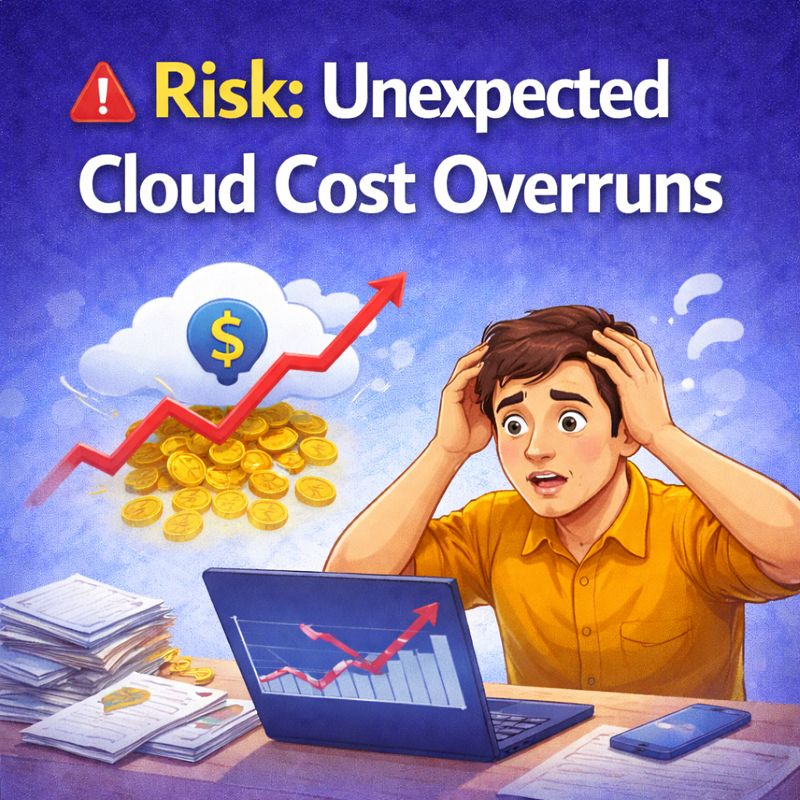
    2. Risk: Unexpected Cloud Cost Overruns

    Cloud Computing Risks and Benefits

    While cloud computing can reduce costs, poor cost management is a major risk.

    Common reasons for cloud cost overruns include:

    • Over-provisioned resources
    • Idle virtual machines
    • Unmonitored data transfer costs
    • Lack of budget alerts

    Because cloud billing is usage-based, expenses can silently grow if left unmanaged.

    Business impact:

    • Monthly cloud bills exceeding on-premise costs
    • Difficulty forecasting long-term expenses
    • Reduced ROI from cloud investments

    This risk highlights the importance of cloud cost optimization strategies, not just migration.


    3. Benefit: Scalability That Matches Business Growth

    Scalability is one of the most powerful cloud computing benefits.

    Cloud infrastructure allows businesses to:

    • Instantly scale resources up or down
    • Handle seasonal traffic spikes
    • Support rapid business expansion without delays

    Unlike traditional infrastructure, scaling does not require purchasing new hardware or waiting weeks for setup.

    Why business leaders value this:

    • Faster go-to-market for new products
    • Improved customer experience during peak demand
    • No wasted resources during low-usage periods

    For growing businesses, scalability directly supports revenue opportunities.


    4. Risk: Vendor Lock-In and Limited Flexibility

    Vendor lock-in is a serious long-term cloud computing risk.

    Many cloud providers use:

    • Proprietary services
    • Unique APIs
    • Platform-specific architectures

    Once deeply integrated, switching providers can be expensive, time-consuming, and technically complex.

    Business risks include:

    • Reduced negotiating power with vendors
    • Higher future migration costs
    • Dependency on a single provider’s pricing and roadmap

    This risk becomes more significant as your cloud environment grows.


    5. Benefit: Improved Business Continuity and Disaster Recovery

    Cloud computing significantly improves business resilience.

    Most cloud providers offer:

    • Built-in data redundancy
    • Automated backups
    • Multi-region disaster recovery options

    In case of hardware failure, cyber incidents, or natural disasters, cloud systems can recover faster than traditional setups.

    Why this matters to businesses:

    • Reduced downtime costs
    • Faster recovery time objectives (RTO)
    • Protection against data loss

    For mission-critical operations, this benefit alone can justify cloud adoption.


    6. Risk: Data Security and Privacy Concerns

    Security remains one of the most discussed cloud computing risks.

    While cloud providers invest heavily in security, risks still exist due to:

    • Misconfigured cloud environments
    • Weak access controls
    • Shared responsibility misunderstandings
    • Insider threats

    Additionally, storing sensitive business or customer data in the cloud raises privacy and regulatory concerns.

    Potential business consequences:

    • Data breaches
    • Compliance violations
    • Loss of customer trust
    • Financial penalties

    Cloud security is strong — but only when implemented correctly.


    7. Benefit: Faster Deployment and Innovation

    Cloud computing enables businesses to move faster.

    With cloud platforms, teams can:

    • Deploy applications in minutes
    • Test new ideas without heavy investment
    • Experiment with emerging technologies like AI-powered solutions and advanced analytics that accelerate innovation without heavy infrastructure investments.

    This speed allows organizations to innovate without traditional infrastructure constraints.

    Business advantage:

    • Reduced time-to-market
    • Higher agility in competitive markets
    • Ability to respond quickly to customer needs

    For companies focused on digital transformation, this benefit is critical.


    8. Risk: Compliance and Regulatory Challenges

    Compliance is a major concern, especially for industries like:

    • Finance
    • Healthcare
    • Banking
    • Government services

    Cloud computing introduces challenges such as:

    • Data residency requirements
    • Industry-specific regulations
    • Auditing and reporting complexities

    Failure to align cloud usage with regulatory standards can result in serious penalties.

    Why business owners should care:

    • Compliance violations can lead to legal action
    • Regulatory audits become more complex
    • Not all cloud regions meet local data laws

    Compliance planning must be part of cloud strategy, not an afterthought.


    9. Benefit: Enhanced Collaboration and Remote Work Enablement

    Cloud computing supports modern work environments.

    By centralizing applications and data in the cloud, businesses enable:

    • Remote and hybrid work
    • Real-time collaboration
    • Secure access from anywhere

    This benefit has become especially important for distributed teams and global operations.

    Business value:

    • Improved productivity
    • Better employee flexibility
    • Faster decision-making across teams

    Cloud platforms make collaboration scalable and location-independent.


    10. Risk: Downtime and Service Dependency

    Despite high availability promises, cloud services are not immune to outages.

    Potential causes include:

    • Provider-wide service disruptions
    • Network failures
    • Region-specific outages

    Since cloud infrastructure is externally managed, businesses have limited control during such incidents.

    Business risks include:

    • Operational downtime
    • Revenue loss
    • Customer dissatisfaction

    Even short outages can have significant financial and reputational impact.


    Final Thoughts: Weighing Cloud Computing Risks and Benefits

    Cloud computing is neither a guaranteed win nor a risky gamble — it is a strategic business decision.

    The benefits:

    • Cost efficiency
    • Scalability
    • Resilience
    • Innovation
    • Collaboration

    The risks:

    • Cost overruns
    • Vendor lock-in
    • Security misconfigurations
    • Compliance challenges
    • Service dependency

    For business owners, success lies in understanding both sides and adopting cloud computing with clear governance, security controls, and long-term planning.

    Cloud computing delivers its full value when it’s treated not as an IT upgrade — but as a business transformation strategy.

    • The main benefits of cloud computing for businesses include lower infrastructure costs, on-demand scalability, improved disaster recovery, faster deployment of applications, and better collaboration across teams. Cloud platforms allow businesses to pay only for what they use while supporting growth and digital transformation.

    • The biggest cloud computing risks include unexpected cost overruns, data security misconfigurations, vendor lock-in, compliance challenges, and dependency on cloud service providers. These risks increase when cloud environments are not properly governed or monitored.

    • Yes, cloud computing can be secure for sensitive business data when best practices are followed. Leading cloud providers offer advanced security features, but businesses are responsible for proper access controls, encryption, compliance management, and regular security audits under the shared responsibility model.

    • Businesses can reduce cloud computing risks by implementing cost monitoring tools, choosing the right cloud architecture, avoiding over-dependence on proprietary services, enforcing security best practices, and ensuring compliance with industry regulations before and after cloud migration.

  • What’s the Difference Between Strategic Cost Management & Traditional Cost Management?

    What’s the Difference Between Strategic Cost Management & Traditional Cost Management?

    Why do some businesses cut costs and still struggle, while others reduce costs and grow stronger?
    Is controlling expenses enough, or is there a smarter way to manage costs for long-term success?

    The answer often lies in how costs are managed, not just how much is spent. Businesses today operate in highly competitive, technology-driven markets where simple cost-cutting is no longer sufficient. This is where the difference between strategic cost management and traditional cost management becomes critical.

    This article breaks down both approaches, compares them clearly, and helps business leaders decide which model supports sustainable growth.


    What Is Traditional Cost Management?

    Traditional cost management focuses on controlling and reducing costs to improve short-term profitability. It is largely reactive and accounting-driven.

    Key Characteristics of Traditional Cost Management

    • Focuses on cost reduction
    • Looks at historical financial data
    • Treats costs as something to minimize
    • Often implemented during financial pressure
    • Short-term, department-level approach

    In many organizations, traditional cost management involves budgeting, variance analysis, expense approvals, and periodic cost-cutting exercises.


    What Is Strategic Cost Management?

    Strategic cost management goes beyond controlling expenses. It aligns cost decisions with business strategy, competitive positioning, and long-term value creation.

    Key Characteristics of Strategic Cost Management

    • Focuses on value creation, not just savings
    • Considers the entire value chain
    • Uses cost data to support strategic decisions
    • Proactive and future-oriented
    • Integrated across the organization

    Strategic cost management helps businesses understand which costs drive competitive advantage and which do not.


    How Does Strategic Cost Management Differ from Traditional Cost Management?

    difference between strategic cost management and traditional cost management​

    To clearly understand the difference between strategic cost management and traditional cost management, let’s compare them across key dimensions.


    Strategic Cost Management vs Traditional Cost Management: Comparison Table

    Aspect Traditional Cost Management Strategic Cost Management
    Primary Focus Cost reduction Value creation & competitiveness
    Time Horizon Short-term Long-term
    Approach Reactive Proactive
    Decision Basis Historical data Future strategy & market positioning
    Scope Department-level Organization-wide
    View of Costs Costs as expenses Costs as strategic investments
    Competitive Impact Limited High
    Innovation Support Often restricted Actively encouraged
    Role of Technology Minimal Critical enabler

    This table highlights that strategic cost management is not just an evolution—but a fundamental shift in mindset.


    Why Traditional Cost Management Often Falls Short

    Traditional cost management can work in stable environments, but modern businesses face constant change.

    Common Limitations

    • Encourages across-the-board cost cutting
    • Can reduce quality and innovation
    • Ignores customer value
    • Misses long-term opportunities
    • Creates silo-based decision-making

    For example, cutting IT or R&D budgets may reduce costs in the short term but can severely impact competitiveness later.


    Why Strategic Cost Management Is More Relevant Today

    Markets today are shaped by:

    Strategic cost management helps businesses allocate resources more intelligently instead of simply spending less.


    Cost Perspective: Expense vs Investment

    One major difference between strategic cost management and traditional cost management is how costs are viewed.

    Traditional View

    • Costs are treated as expenses to be minimized
    • Success is measured by immediate savings

    Strategic View

    • Costs are evaluated as investments
    • Focus is on return, impact, and differentiation

    For example, investing in automation may increase costs initially but reduce operational expenses and errors long-term.


    Role of Competitive Advantage

    Traditional cost management rarely considers competitors.

    Strategic cost management:

    • Benchmarks costs against competitors
    • Aligns spending with differentiation strategy
    • Supports cost leadership or value leadership

    This makes cost management a competitive weapon, not just a financial exercise.


    Decision-Making Style

    Traditional Cost Management

    • Finance-driven
    • Rules-based
    • Focused on compliance

    Strategic Cost Management

    • Leadership-driven
    • Strategy-aligned
    • Data-informed but future-focused

    Strategic cost decisions often involve cross-functional collaboration between finance, operations, technology, and leadership.


    Impact on Innovation and Growth

    Traditional cost management often:

    • Restricts experimentation
    • Discourages innovation
    • Reduces agility

    Strategic cost management:

    • Encourages innovation with purpose
    • Funds high-impact initiatives
    • Balances efficiency with growth

    Businesses that innovate successfully often use strategic cost management to prioritize innovation spend, not eliminate it.


    Technology’s Role in Strategic Cost Management

    Technology is a key enabler of strategic cost management.

    Examples include:

    • Analytics to identify cost-value relationships
    • Automation to reduce process inefficiencies
    • Digital tools for real-time cost visibility
    • AI-driven forecasting and optimization

    Traditional cost management typically lacks these advanced insights.


    When Does Traditional Cost Management Still Make Sense?

    Despite its limitations, traditional cost management still has its place.

    It is useful when:

    • Organizations need quick expense control
    • Cash flow is under immediate pressure
    • Cost discipline is lacking
    • Compliance and budgeting are primary goals

    However, relying on it alone is risky in dynamic markets.


    When Should Businesses Adopt Strategic Cost Management?

    Strategic cost management is ideal when businesses:

    • Are scaling operations
    • Face strong competition
    • Are undergoing digital transformation
    • Want sustainable profitability
    • Need smarter resource allocation

    It is especially valuable for mid-sized and enterprise organizations with complex cost structures.


    How Businesses Transition from Traditional to Strategic Cost Management

    Transitioning does not happen overnight.

    Key steps include:

    • Linking cost analysis to business strategy
    • Identifying value-driving activities
    • Using data and analytics for insights
    • Involving leadership in cost decisions
    • Moving beyond departmental silos

    This shift transforms cost management into a strategic capability.


    Real-World Example (Conceptual)

    A company using traditional cost management might cut customer support costs to save money.

    A company using strategic cost management might:

    • Analyze customer lifetime value
    • Invest in automation for support
    • Improve response times
    • Reduce churn
    • Increase long-term revenue

    The difference lies in thinking beyond immediate savings.


    Key Takeaways for Business Leaders

    The difference between strategic cost management and traditional cost management is not just operational—it is philosophical.

    • Traditional cost management asks: How can we spend less?
    • Strategic cost management asks: How can we spend smarter to win?

    In today’s competitive environment, businesses that treat cost management as a strategic function are better positioned for growth, resilience, and long-term success.


    Final Thoughts

    Understanding the difference between strategic cost management and traditional cost management helps business owners and leaders make better financial and strategic decisions.

    While traditional cost management focuses on controlling expenses, strategic cost management aligns costs with competitive advantage, innovation, and sustainable value creation.

    For organizations planning long-term success, strategic cost management is no longer optional—it is essential.

    • The main difference is that traditional cost management focuses on short-term cost reduction, while strategic cost management focuses on long-term value creation and competitive advantage.

    • Strategic cost management helps businesses align spending with business goals, improve competitiveness, support innovation, and achieve sustainable profitability.

    • Yes, traditional cost management is useful for budgeting, compliance, and short-term expense control, but it is often insufficient on its own in competitive and dynamic markets.

    • Growing, mid-sized, and enterprise businesses benefit the most, especially those undergoing digital transformation or facing strong market competition.

  • Website Development Cost in India (2025 Guide): Complete Breakdown for Businesses 

    Website Development Cost in India (2025 Guide): Complete Breakdown for Businesses 

    Wondering how much it really costs to build a website in India in 2025? 
    What should business owners budget if they want a professional, scalable, and high-performing website? 

    Whether you’re a startup founder, a small business owner, or a decision-maker planning a digital presence upgrade, understanding website development costs is critical for budgeting and planning. In this comprehensive guide, we’ll break down the real cost factors, typical price ranges, hidden fees, and investment considerations for websites in India. 

    1. Personal or Portfolio Website: Keeping it Simple 

    If you need a basic online presence — perhaps as a freelancer, artist, or professional showcasing your work — a simple personal/portfolio website is often your first step online. 

    Typical Cost 

    • ₹5,000 – ₹20,000 for a basic static or one-page site with: 

    • About 

    • Portfolio/gallery 

    • Contact form 

    • Simple navigation 

    Why It Costs This Much 

    These sites generally require: 

    • Minimal design 

    • Few pages 

    • A simple content structure 

    Often built with standard HTML or a template-based CMS like WordPress, these sites can be done quickly and affordably.  

    2. Small Business Website: Professional Online Identity 

    Small businesses — consultants, local stores, clinics, and service providers — need a professional website to attract customers and communicate offerings clearly. 

    Typical Cost 

    • ₹15,000 – ₹50,000 
      depending on pages, design polish, and responsive layouts. 

    What’s Included 

    • Home, About, Services/Products pages 

    • Contact & enquiry forms 

    • Basic SEO setup 

    • Mobile-friendly design 

    This category covers most brochure websites intended to establish trust, inform customers, and convert inquiries

    3. Corporate or Medium Business Website: More Pages, More Features 

    For growing businesses with multiple services, teams, and evolving content needs, a corporate website offers more structure and professionalism. 

    Typical Cost 

    • ₹30,000 – ₹1,00,000 
      depending on UI/UX needs and number of sections.  

    What You Get 

    • Custom design with brand alignment 

    • CMS for easy updates 

    • Blog or news section 

    • Contact & lead capture workflows 

    • Optional portfolio/case studies 

    Corporate websites often require more planning and sharper design — plus content strategy if you want strong SEO presence. 

    4. E-commerce Website: Online Storefronts That Sell 

    Online stores are more complex due to shopping carts, payment gateways, inventory management, and user accounts. 

    Typical Cost 

    • 🛒 ₹50,000 – ₹2,50,000+ 
      based on products, pricing features, security, and checkout complexity.  

    What Factors Influence This 

    • Product catalog size 

    • Payment gateway integrations 

    • Order tracking and customer accounts 

    • Loyalty/discount mechanisms 

    • Shipping calculators 

    E-commerce projects need robust testing, performance checks, and security compliance, which adds to development effort. 

    5. Custom Web Applications: Complex Business Logic & Scalability 

    If your digital vision goes beyond static content or shopping — such as portals, marketplaces, SaaS applications, or platforms tied to internal systems — you’re building a custom web app

    Typical Cost 

    • ₹1,00,000 – ₹10,00,000+ 
      depending on feature complexity and integrations.  

    Includes 

    • Backend logic 

    • Database integration 

    • User roles & permissions 

    • API integrations 

    • Custom UI/UX 

    Custom web apps are bespoke solutions built from scratch — often involving multiple developers, designers, and QA specialists. These projects require more planning and investment but deliver differentiated technical value. 

    6. Ongoing Costs: More Than Just Development 

    Building the website is only part of the story. There are ongoing costs you must budget for: 

    Domain Name 

    • ₹500 – ₹1,500 per year 
      for a .in or .com domain.  

    Web Hosting 

    • ₹2,000 – ₹10,000 per year for shared hosting 

    • ₹6,000 – ₹50,000 per year for VPS/cloud hosting 
      Higher when performance and uptime matter.  

    SSL Certificate 

    • Free (Let’s Encrypt) or ₹1,000 – ₹5,000 for premium options. 

    Maintenance & Support 

    • ₹5,000 – ₹25,000+ per month depending on scope. 
      This covers updates, backups, security patches, and feature tweaks.  

    SEO & Marketing Setup 

    • ₹5,000 – ₹30,000+ (one-time or monthly) 
      for on-page SEO, analytics, and search visibility. 

    These often get overlooked but are crucial to keeping your site secure, discoverable, and running smoothly. 

    7. What Most Affects Website Development Costs? 

    Knowing price ranges is good, but understanding why costs vary helps you budget realistically. 

    Platform Choice 

    • WordPress is affordable and flexible. 

    • Shopify/Magento for ecommerce add recurring or licensing costs. 

    • Custom code (React, Laravel) increases effort and cost.  

    Design Complexity 

    Custom UI/UX design vs. template modifications — true custom design takes more time and resources. 

    Functionality & Features 

    Every new feature adds cost: 

    • Login systems 

    • API integrations 

    • Chatbots 

    • Custom dashboards 

    Content & Media 

    Professional copywriting, imagery, video, and branding add to development costs. 

    Developer Skill & Location 

    Developer rates vary across cities and experience levels; agencies cost more than freelancers but often deliver smoother workflows.  

    8. DIY Platforms vs. Professional Development 

    You also have alternatives to professional development: 

    DIY Website Builders 

    Platforms like Wix/Squarespace offer templates and easy editors. 

    Pros: 

    • Very low initial cost 

    • Quick setup 

    • Good for simple sites 

    Cons: 

    • Limited flexibility 

    • Subscription fees 

    • Less control over SEO/performance 

    For business owners seeking full control and scalability, professional development often delivers better long-term value. 

    9. Cost Examples by Business Goal 

    Landing Page / Microsite 

    • Budget: ₹5,000 – ₹15,000 

    • Used for promotions, single campaigns, or simple showcases.  

    Corporate Website 

    • Budget: ₹30,000 – ₹1,00,000 

    • Multi-page, brand-aligned, with CMS.  

    E-Commerce Store 

    • Budget: ₹50,000 – ₹2,50,000+ 

    • With payments, catalog, and customer dashboards.  

    Custom Web Portal 

    • Budget: ₹1,00,000 – ₹10,00,000+ 

    • Complex workflows and integrations.  

    This gives you a practical view of how budget scales with business goals. 

    10. Hidden Costs to Watch Out For 

    Beyond the obvious, some costs surprise first-time builders: 

    Training 

    Teaching admins/teams how to update content and manage the site. 

    Security Hardening 

    Extra measures for PCI compliance, advanced firewalls, or penetration testing. 

    Performance Optimization 

    Page speed, CDN setup, and caching tools (could be monthly or one-time). 

    Feature Updates 

    Mobile apps, booking systems, or user dashboards later add cost. 

    Planning for these in advance saves last-minute budget shocks and delays. 

    11. How to Get the Best Value From Your Budget 

    To make the most of your investment: 

    ✔ Define your goals clearly before you start 
    ✔ Prioritize features into MVP vs future phases 
    ✔ Choose a development partner with transparent pricing 
    ✔ Get detailed proposals and project milestones 
    ✔ Keep future maintenance in mind when negotiating 

    Smart planning prevents scope creep and keeps costs aligned with outcomes. 

    12. Final Thoughts: Budgeting for 2025 and Beyond 

    As digital presence becomes essential, website development in India offers wide pricing flexibility — from very affordable basic sites to advanced, enterprise-level custom applications. India’s competitive development market gives businesses from startups to large enterprises the ability to build optimized, scalable, and feature-rich websites without international price tags. 

    Whether you’re launching your first website or upgrading to a full digital platform, a clear understanding of website development costs will empower you to make better financial and strategic decisions. 

    • Website development cost in India typically ranges from ₹5,000 for basic websites to ₹10,00,000 or more for complex custom web applications, depending on features and complexity.

    • Key factors include website type, design complexity, platform or technology used, number of features, developer expertise, and ongoing costs like hosting and maintenance.

    • WordPress websites are generally cheaper and faster to build, while custom development costs more but offers greater flexibility, scalability, and control for growing businesses.

    • Yes, common hidden costs include website maintenance, security updates, hosting upgrades, SEO setup, performance optimization, and future feature enhancements.

  • Top 10 Benefits of IoT in Healthcare Transforming Patient Care in 2025

    Top 10 Benefits of IoT in Healthcare Transforming Patient Care in 2025

    How are healthcare providers improving patient outcomes while managing rising costs?
    Can technology help hospitals deliver better care without overwhelming staff?

    In 2025, healthcare systems worldwide are under pressure to deliver faster, safer, and more personalized care. One technology playing a critical role in this shift is the Internet of Things (IoT).

    From connected medical devices to real-time patient monitoring, IoT is reshaping how healthcare organizations operate. This article explores the top benefits of IoT in healthcare and why it has become a strategic investment for hospitals, clinics, insurers, and health-tech companies.


    1. Real-Time Patient Monitoring and Improved Outcomes

    One of the most impactful benefits of IoT in healthcare is continuous, real-time patient monitoring.

    IoT-enabled devices can track:

    • Heart rate
    • Blood pressure
    • Oxygen levels
    • Blood glucose
    • Activity and sleep patterns

    This real-time data allows healthcare professionals to detect issues early, intervene faster, and improve patient outcomes—especially for chronic conditions and post-surgical care.


    2. Better Care for Chronic Disease Management

    Chronic diseases require ongoing monitoring and consistent care, which can strain healthcare systems.

    IoT helps by:

    • Enabling remote monitoring of patients at home
    • Reducing unnecessary hospital visits
    • Alerting providers to abnormal readings
    • Supporting long-term condition management

    This leads to better quality of life for patients and reduced operational burden for healthcare providers.


    3. Reduced Hospital Readmissions

    Hospital readmissions are costly and often preventable.

    With IoT-powered monitoring:

    • Patients are tracked after discharge
    • Early warning signs are identified
    • Follow-ups become more proactive
    • Complications are addressed before escalation

    Reducing readmissions improves patient safety while significantly lowering healthcare costs.


    4. Enhanced Operational Efficiency in Healthcare Facilities

    IoT is not just about patient care—it also improves hospital operations.

    Healthcare organizations use IoT to:

    • Track medical equipment in real time
    • Monitor asset usage
    • Optimize staff workflows
    • Reduce equipment downtime

    This operational visibility helps hospitals run more efficiently and reduce wastage.


    5. Improved Patient Safety and Error Reduction

    Patient safety is a top priority in healthcare, and IoT plays a vital role in minimizing risks.

    IoT devices help:

    • Monitor medication adherence
    • Prevent dosage errors
    • Track patient movement to avoid falls
    • Ensure timely alerts during emergencies

    By reducing manual errors, IoT creates a safer care environment.


    6. Support for Remote and Home-Based Care

    Remote care has become a core component of modern healthcare delivery.

    IoT enables:

    • Home-based monitoring for elderly patients
    • Remote care for rural or underserved areas
    • Post-treatment recovery tracking
    • Integration with telemedicine platforms

    This expands access to care while lowering infrastructure and staffing costs.


    7. Data-Driven Clinical Decision-Making

    Healthcare decisions are only as good as the data behind them.

    IoT provides:

    • Continuous streams of patient data
    • Real-world health insights
    • Actionable analytics for clinicians
    • Better treatment personalization

    With accurate and timely data, clinicians can make informed decisions that improve patient outcomes. When combined with custom AI development services, this IoT-generated data can power predictive analytics, early risk detection, and intelligent clinical decision support systems.


    8. Cost Reduction Across Healthcare Operations

    Another major benefit of IoT in healthcare is cost efficiency.

    IoT helps reduce costs by:

    • Preventing emergency situations
    • Lowering hospital stays
    • Reducing equipment loss
    • Improving resource allocation

    Over time, these efficiencies result in significant savings for healthcare organizations.


    9. Improved Patient Engagement and Experience

    Patients today expect more involvement in their healthcare journey.

    IoT improves engagement by:

    • Allowing patients to track their own health metrics
    • Providing transparency into treatment progress
    • Encouraging proactive health management
    • Building trust through real-time insights

    Engaged patients are more likely to follow treatment plans and achieve better outcomes.


    10. Scalability and Future-Ready Healthcare Systems

    Healthcare systems must be prepared for growing populations and increasing demand.

    IoT offers:

    • Easy scalability across departments
    • Integration with AI and analytics platforms
    • Support for predictive healthcare models
    • A foundation for smart hospitals

    By adopting IoT, healthcare organizations future-proof their operations and stay competitive.


    Why IoT Is Becoming Essential in Healthcare

    The benefits of IoT in healthcare extend far beyond connected devices. IoT enables:

    • Preventive care instead of reactive treatment
    • Continuous monitoring instead of periodic checkups
    • Data-driven healthcare instead of guesswork

    As healthcare continues to digitize, IoT becomes a core pillar of modern, patient-centric care.


    When Should Healthcare Organizations Invest in IoT?

    IoT adoption makes sense when organizations want to:

    • Improve patient outcomes
    • Reduce operational inefficiencies
    • Expand remote care capabilities
    • Lower long-term healthcare costs
    • Build scalable digital infrastructure

    Hospitals, clinics, insurers, and health-tech startups all stand to benefit from well-planned IoT implementations.


    Final Thoughts

    The benefits of IoT in healthcare are reshaping how care is delivered, managed, and scaled in 2025. From real-time monitoring to cost savings and improved patient safety, IoT empowers healthcare organizations to deliver smarter, more connected care.

    For healthcare leaders and business owners, IoT is no longer a future concept—it is a strategic necessity for sustainable growth and better patient outcomes.

    • IoT in healthcare refers to connected medical devices and systems—such as wearables, remote monitors, and smart equipment—that collect, transmit, and analyze patient data in real time.

    • IoT enables continuous monitoring, early detection of health issues, personalized treatment, and faster clinical decisions, leading to better outcomes and reduced hospital visits.

    • When implemented correctly, IoT systems use encryption, access controls, and compliance frameworks (like HIPAA or equivalent standards) to protect patient data and ensure regulatory adherence.

    • Common use cases include remote patient monitoring, chronic disease management, smart hospital assets, medication tracking, and real-time alerts for critical health events.

  • Biggest Challenges of Digital Transformation: What’s Really Holding Companies Back?

    Biggest Challenges of Digital Transformation: What’s Really Holding Companies Back?

    How do you know if your digital transformation will stall — and which obstacles are the most dangerous?
    Which challenges are inevitable, and which you can avoid with smart planning?

    Digital transformation remains a top strategic priority for businesses in 2025, but many initiatives either slow to a crawl or fail to deliver the promised value. Below I unpack the biggest, recurring challenges—contrast them in a quick table so you can see tradeoffs at a glance—and then dive into practical, business-focused advice for getting past each blocker.


    What are the top barriers to successful digital transformation?

    Why do some companies see fast results while others stall?

    (Short answers up front: unclear outcomes, legacy technology, people and culture, skills gaps, poor data, security/compliance, and weak measurement are the usual suspects. The difference between success and failure is how you sequence fixes and who’s accountable.)


    Quick comparison: Challenges, impact, and recovery moves

    Challenge Typical business impact Practical recovery move
    Unclear strategy / weak KPIs Wasted spend, unfocused projects, stakeholder fatigue Define top 3 business outcomes; assign accountable owners and 30/60/90 day KPIs
    Legacy systems & integration debt Data silos, slow rollout, fragile automations Build an API-first layer, use iPaaS, and incrementally refactor the worst systems
    Cultural resistance & change fatigue Low adoption, program abandonment Visible executive sponsorship, change champions, role-based enablement
    Skills shortage & hiring gap Delays, poor delivery quality, vendor lock-in Upskill internal teams, hire contractors for short gaps, create blended teams
    Poor data quality & governance Wrong insights, failed AI pilots, regulatory risk Start with high-value data sources, run master-data cleanups, set data contracts
    Security & regulatory hurdles Rework, audit failures, reputational risk Security-by-design, early privacy impact assessments, automated controls
    Vendor fragmentation & tool sprawl Higher TCO, coordination overhead Rationalize stack; pick platforms with strong integration stories
    Lack of measurement & value capture Transformation looks “expensive” Instrument baselines, measure deltas, report ROI to stakeholders


    Why these challenges keep repeating

    Many organizations make the same three mistakes:

    1. They start with technology, not outcomes. Teams choose tools or vendors before they’ve agreed which metric will change. That flips the playbook: strategy should pick tech, not the other way around.
    2. They underestimate the people side. Training once and flipping a switch rarely moves behavior. Adoption requires role-based coaching, incentives, and visible short-term wins.
    3. They treat legacy as someone else’s problem. Existing systems aren’t just technical debt — they’re operational glue. Ignoring them creates brittle integrations and unexpected outages.

    These are not theoretical: industry research shows skills shortages, legacy systems, and cultural resistance remain among the top barriers executives report when trying to scale digital initiatives.


    Deep dive: the technical blockers (and what to do about them)

    Legacy systems and integration debt

    Legacy systems are the most persistent drag on transformation. They host critical data and processes but rarely expose stable APIs or decouple properly from new services. The pragmatic path: isolate—don’t immediately replace—by adding an API facade, use integration platforms (iPaaS) to mediate traffic, and prioritize incremental refactoring of the modules that block the most value. This reduces risk and keeps operations stable during migration.

    Tool sprawl and vendor fragmentation

    Buying best-of-breed point solutions often creates an orchestration problem later. Rationalize the stack: prefer platforms with strong integration ecosystems and open APIs, and consolidate where sensible. A smaller, well-integrated stack reduces total cost of ownership and speeds troubleshooting.

    Scalability and observability blind spots

    Too many projects ignore observability until they’re at scale. Prototype with realistic loads, implement unified monitoring, and instrument critical paths early. Observability prevents “I thought it worked” surprises when usage grows.


    Deep dive: the people and process blockers (and fixes)

    Cultural resistance and change fatigue

    Change fatigue is real—especially after years of constant digital initiatives. Fixes that actually work: visible executive sponsorship (not just memos), on-the-ground champions, short, visible wins, and role-based enablement. Allocate time for managers to coach their teams; don’t treat training as a checkbox.

    Skills shortage and the hiring conundrum

    Cloud, data engineering, and AI skills are in short supply. The pragmatic approach is blend-and-borrow: invest in reskilling for core capabilities, hire contractors to fill time-sensitive gaps, and structure squads so junior staff pair with experienced hires. This reduces vendor dependency while improving internal capability.

    Poor change management and governance

    Successful projects have strong change governance: clear owners, a steering committee with budget authority, and a cadence of decision reviews. Without this, projects stall in indecision or scope creep. Simple governance templates (outcomes, owners, metrics, risk register) go a long way.


    Data, trust, and the AI-era problem

    Many organizations rush to analytics or generative AI before their data is ready. The result: hallucinations, bad insights, and loss of trust. Start small—clean the highest-value datasets, establish data contracts, add provenance and lineage, and only expose governed data to automation efforts. Data governance should be pragmatic and prioritized by business impact, not textbook perfection. Research shows a large share of transformations fail to capture value because data and governance weren’t address early enough.


    Security, compliance, and risk management

    Regulation and a sophisticated threat landscape mean security can’t be an afterthought. Embed threat modeling and privacy assessments into design sprints. Automate compliance checks where you can and treat security as a product feature: built-in, tested, and measurable.


    How to prioritise transformation work so it actually delivers value

    1. Pick the metric first. Choose three business outcomes (e.g., reduce order-to-cash by 30%, increase renewal rate by 8%, cut manual claims by 40%). Everything else aligns to these metrics.
    2. Map dependencies. Identify which legacy systems, teams, and data sources must be touched to deliver the outcome—and which can be bypassed or simulated.
    3. Run outcome-focused pilots. A 6–10 week pilot that proves a measurable improvement in one metric is far more persuasive than a year-long technical proof-of-concept.
    4. Instrument before you change. Capture baseline metrics so you can measure delta and compute ROI.
    5. Stage investment. Fund waves based on proven outcomes, not on vendor promises.


    Leadership checklist: five actions to unblock transformation this quarter

    • Appoint a single accountable executive for each outcome.
    • Fund change management at 10–15% of project budgets (not 1–2%).
    • Start with one strategic data source and make it “production ready.”
    • Require integration contracts (APIs) for all new purchases.
    • Run a 60-day pilot that has one simple success metric and publicize the result.

    Industry reports show many organisations under-invest in change management and over-invest in tooling—flip that ratio and your chances of success go up dramatically.


    Final thought: treat transformation like product development, not a checklist

    The organisations that win don’t chase the latest technology; they deliver measurable outcomes through disciplined sequencing: define the metric, secure the people and governance, fix the highest-impact technical debt, and show short wins. That combination turns expenditures into investments.

    • The biggest challenges of digital transformation include legacy systems, resistance to change, lack of digital skills, poor data quality, security concerns, and unclear business objectives.

    • Many initiatives fail due to weak leadership alignment, underestimating cultural change, fragmented technology decisions, lack of measurable outcomes, and insufficient change management.

    • Organizations can overcome these challenges by aligning initiatives with business goals, modernizing systems incrementally, investing in employee enablement, and measuring outcomes consistently.

    • While digital transformation is ongoing, many organizations start seeing measurable improvements within 3–6 months when initiatives focus on specific, outcome-driven pilots.

  • Business Transformation Challenges: What’s really blocking progress in 2025?

    Business Transformation Challenges: What’s really blocking progress in 2025?

    How do you know if your transformation will stall — and what stops the ones that succeed?
    Which challenges are table-stakes, and which are avoidable?

    Business transformation is a strategic imperative in 2025: Leaders invest in cloud, AI, automation, and new operating models to stay competitive—often requiring enterprise-grade AI development to translate strategy into execution.. But while investment is high, so is the failure rate — many programs struggle to deliver promised value. This article lays out the practical, high-impact challenges leaders face today, shows their real consequences, and gives an action-oriented path to reduce risk and speed outcomes.


    What are the biggest business transformation challenges today?

    Below is a concise table that contrasts common challenges with their business impact and what a practical recovery move looks like.

    Challenge Business Impact Practical recovery move
    Legacy systems & poor integration Slow rollout, data silos, failed AI pilots Prioritize API-first layering, modular integration, incremental refactors
    Cultural resistance & change fatigue Low adoption, program abandonment Executive sponsorship + visible change champions + targeted enablement
    Lack of digital skills & talent shortage Delays, low-quality delivery, vendor dependence Upskill, borrow talent (contractors), create blended teams
    Unclear strategy & weak KPIs Wasted spend, unfocused projects Define value outcomes, 30/60/90 KPIs, business owners as sponsors
    Data quality & governance issues Inaccurate insights, regulatory risk Data contracts, master data cleanup + governance guardrails
    Security & compliance concerns Rework, audit failures, reputational risk Security-by-design, privacy impact assessments early
    Vendor fragmentation & tool sprawl Higher TCO, coordination overhead Rationalize stack, prefer platforms with strong integration stories
    Poor change management Low end-user adoption Role-based training, small wins, continuous feedback loops
    Over-engineering for scale Cost blowouts, delayed launches Start with MVPs, measure, then scale proven features
    Weak measurement & value capture Transformation appears “expensive” Capture baseline metrics, measure delta, report outcomes to board


    Why so many transformations stall (and what to watch for)

    A transformation programme can be technologically brilliant and still fail — often the weakest link is non-technical. The top failure themes look familiar:

    1. Strategy without outcomes. Projects start with tech choices, not business problems. If there’s no clear outcome (revenue, margin, cycle time), stakeholders lose patience. Start with the metric you want to change, then pick the tech and process that do it.
    2. Culture eats strategy for breakfast. People resist change when they don’t see personal benefit or fear job loss. Without frontline buy-in and visible executive sponsorship, adoption sputters.
    3. Legacy systems as invisible anchors. Old systems don’t just slow development; they corrupt data flows, frustrate customers, and block automation. Treat them as risks to be isolated and incrementally modernized.
    4. Skill gaps & unrealistic timelines. AI, cloud, and automation need different skills. Hiring everyone isn’t realistic; successful organisations blend reskilling, contractors, and vendor partners to plug gaps without losing control.
    5. Poor data hygiene. Garbage in, garbage out. Rushing to analytics or generative AI on ungoverned data produces wrong answers and erodes trust. Fix data incrementally starting with high-value sources.
    6. Lack of measurement discipline. If you can’t show a short-term win — even a small one — momentum dies. Use conservative success metrics in early stages to demonstrate tangible progress.


    The technical blockers (and low-cost mitigations)

    • Integration debt: Build API facades, use an integration platform (iPaaS) to decouple legacy systems from new services.
    • Scalability surprises: Prototype at expected load using real traces; don’t treat scale as an afterthought.
    • Vendor lock & tool sprawl: Standardize on fewer, well-integrated tools; insist on open APIs.
    • Security & privacy: Bake security into the design phase; run threat models early and automate compliance checks where possible.


    The people & process blockers (and how to fix them)

    • Change fatigue: Break large programs into smaller, visibly valuable waves. Celebrate quick wins.
    • Missing leadership muscle: Appoint a single accountable executive and a steering committee with authority over budgets and timelines.
    • Training gaps: Move from one-time training to role-based playbooks, on-the-job nudges, and embedded learning.
    • Siloed ownership: Create cross-functional squads with shared KPIs and joint incentives.


    How to prioritise transformation work so it actually delivers value

    1. Start with the top 3 business problems that, if solved, move revenue, margin, or risk.
    2. Define clear outcomes and owners — each initiative needs a business owner accountable for measurable results.
    3. Pilot fast, measure faster — run a 6–10 week pilot that proves an outcome, not just a technical proof-of-concept.
    4. Instrument everything — capture baseline metrics before you change anything, so you can measure true impact.
    5. Stage investments — fund successive waves only after the prior wave meets its success criteria.


    A short transformation playbook for leaders

    • Executive alignment session (week 0): Agree top 3 outcomes, KPIs, and an owner for each.
    • Rapid diagnosis (2–3 weeks): Map tech & process debt that blocks those outcomes.
    • Prioritise initiatives (1 week): Use effort vs impact to pick your MVPs.
    • Pilot + measure (6–10 weeks): Small teams with one clear metric; show results publicly.
    • Scale with governance (quarterly): Repeat successful patterns, adopt guardrails, and reallocate budget from failed bets.


    Closing: transform like you’re running a product, not a project

    Treat transformation as a continuous product: define user problems, deliver incremental value, learn, and iterate. That means clear ownership, a measurement culture, modular tech choices, and sustained investment in people and change. When companies follow these principles, they convert technology spend into measurable business advantage — and avoid the common traps that turn promising programs into expensive shelfware.

    • The most common business transformation challenges include legacy systems, resistance to change, lack of digital skills, poor data quality, unclear strategy, and weak execution governance.

    • Many initiatives fail due to unclear business outcomes, low employee adoption, underestimating cultural change, fragmented technology decisions, and lack of measurable success metrics.

    • Organizations can overcome these challenges by aligning transformation with business goals, investing in change management, modernizing systems incrementally, and measuring outcomes consistently.

    • Business transformation is an ongoing process, but meaningful results typically appear within 6–12 months when initiatives are broken into measurable, outcome-driven phases.